


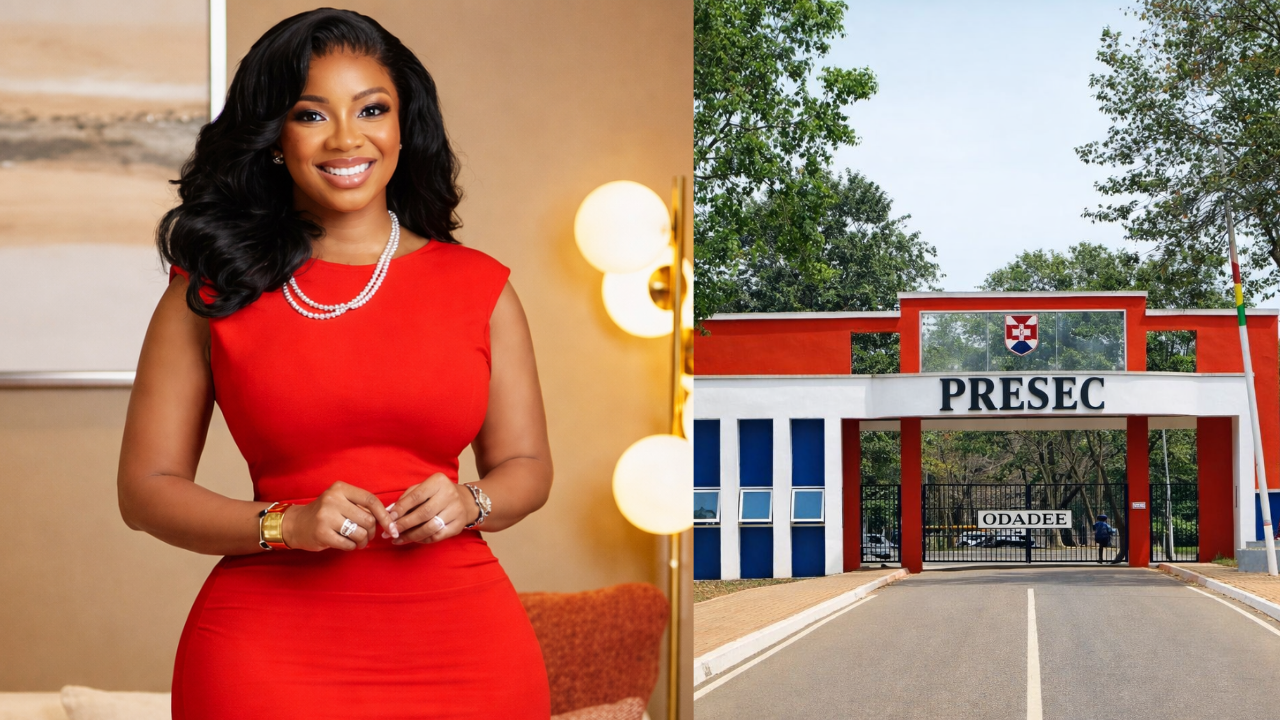
Popular Ghanaian media personality Serwaa Amihere has come under intense public scrutiny following comments she made on a television programme describing Presbyterian Boys’ Senior High School as a “breeding ground for homosexuals.”
In a video that has since gone viral on social media, Serwaa Amihere is heard endorsing and repeating a claim that PRESEC is “full of gays,” further alleging that the school encourages or produces same-sex relationships among its students.
Her remarks immediately sparked backlash, particularly from alumni and stakeholders of the school.
Read also: Man Survives Five Days at Sea After Hiding in Vessel from Togo to Italy
During the programme, one of the presenters—an old student of PRESEC—openly challenged her assertions, questioning both the accuracy and fairness of the comments.
He described the remarks as sweeping generalisations that unfairly stigmatise students and alumni of one of Ghana’s most respected secondary institutions.
PRESEC, known for its strong academic record and contributions to national leadership, has firmly rejected the characterisation.
Old students and supporters have condemned the comments as defamatory, irresponsible, and damaging to the school’s reputation.
Several alumni associations described the remarks as rooted in prejudice rather than evidence, urging public figures to exercise restraint and responsibility when discussing sensitive social issues.
The controversy has reignited debate about the role of media personalities in shaping public discourse, particularly on topics such as sexuality, education, and youth development.
Critics argue that statements made on national platforms carry significant influence and should be grounded in verified facts rather than personal opinions or stereotypes.
While Serwaa Amihere has not issued a formal apology as of the time of this report, calls continue to mount for her to clarify or retract the statements.
Many commentators have stressed that regardless of personal beliefs, institutions and individuals should not be publicly labelled in ways that promote stigma or discrimination.
Also read: Okada Rider Impregnates Landlord’s Wife and Daughter
The incident serves as a reminder of the ethical responsibilities attached to media influence and the need for respectful, evidence-based conversations in Ghana’s public space.