


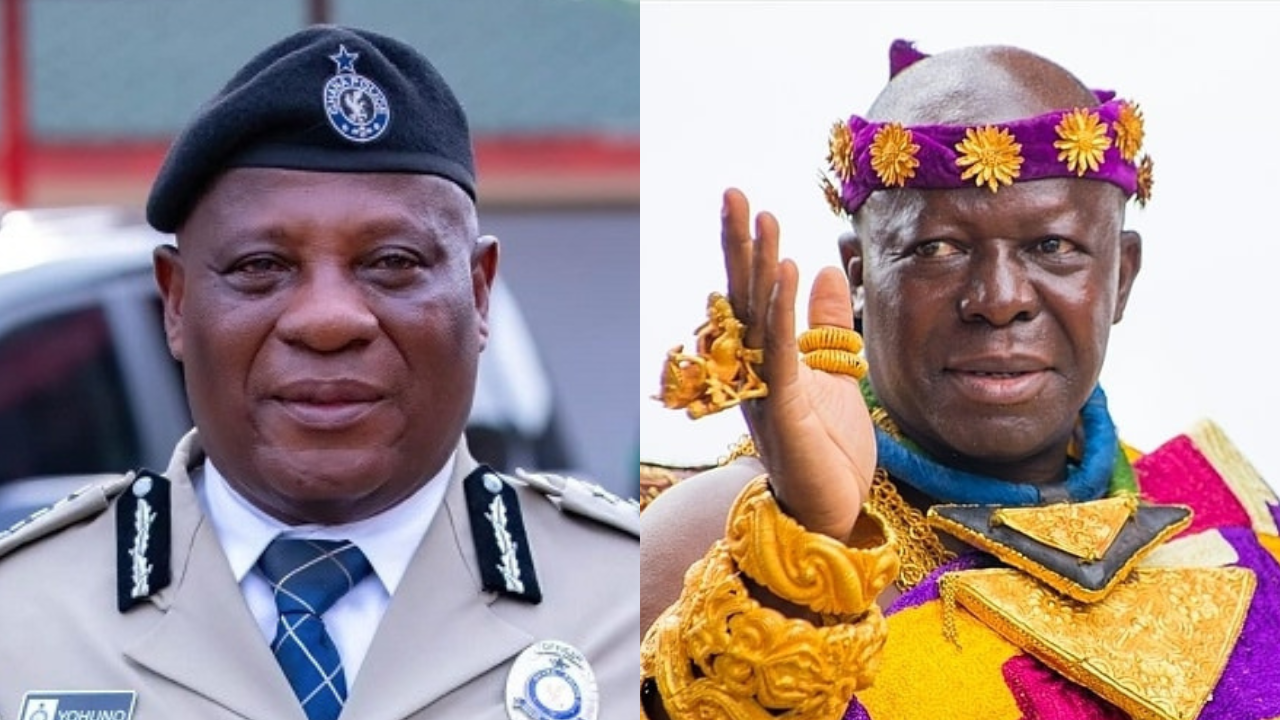
In a remarkable moment of national recognition, the Inspector-General of Police (IGP), Christian Tetteh Yohuno, has lauded the Asantehene, Otumfuo Osei Tutu II, as a “Modern-Day King Solomon” for his exceptional wisdom and unwavering commitment to peacebuilding in Ghana.
This commendation came during a historic visit made by Otumfuo to the Ghana Police Service Headquarters in Accra on 6th January 2025 — a first by any sitting Asantehene.
The visit symbolized a significant gesture of unity and partnership between traditional authority and state security institutions.
Read also: Prophet Fire Oja Arrested Over Alleged Defamation of Popular Musician. FULL STORY
Welcoming Otumfuo and his delegation, the IGP praised the monarch’s consistent role in promoting peace, stability, and national cohesion.
According to IGP, Otumfuo’s wise counsel, humility, and diplomacy have earned him admiration across the country and beyond, likening his leadership qualities to those of the biblical King Solomon.
“Your Majesty, you have demonstrated rare wisdom in times of national tension and transition. Your interventions in conflict resolution and your commitment to harmony make you not just a traditional ruler, but a statesman whose legacy will live on,” Christian Tetteh Yohuno stated.
Otumfuo Osei Tutu II, in his address, commended the Ghana Police Service for its dedication to public safety and institutional reforms under Tetteh Yohonu’s leadership.
He stressed the importance of collaboration between traditional leaders and the police in maintaining law and order, and pledged his continued support to national development efforts.
The visit was attended by senior police officers, traditional leaders, and government representatives, and was marked by rich cultural displays, warm exchanges, and reaffirmed dedication to peacebuilding.
Also read: Kasoa New Market Fire: Trader Devastated as Life Savings Burnt to Ashes
The occasion has been widely hailed as a symbol of unity, mutual respect, and the strengthening of ties between Ghana’s traditional leadership and state institutions.