


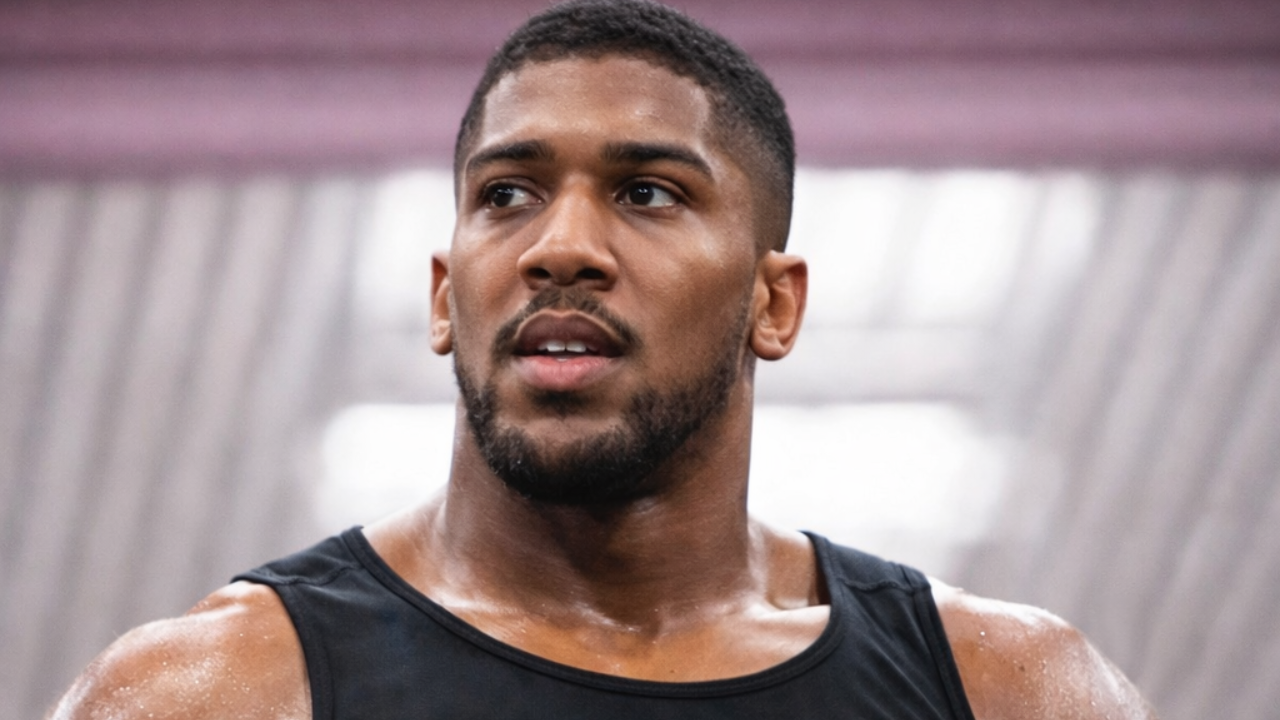
The world-renowned boxer Anthony Joshua recently shared a brief but deeply reflective message on his Snapchat account: “Can you have a deep relationship with God and make it to heaven without religion?”
Moments of sudden loss often force individuals to confront questions that success, fame, or routine can postpone.
For someone like Anthony Joshua—who has achieved global recognition, wealth, and athletic dominance—the loss of close companions is a stark reminder that human life is not measured by titles or accolades alone.
His question does not read as a declaration, but as an inquiry—one that reflects inner wrestling rather than certainty.
Read also: ‘You Will Hear Things’ – Woman Shares the Difference between Men and Women Advice
It speaks to a universal human experience: when confronted with death, people often reassess their beliefs about God, purpose, accountability, and the afterlife.
Joshua’s message touches on a long-standing debate within religious and philosophical circles: whether a genuine relationship with God is dependent on organized religion.
For many, religion provides structure—doctrine, community, moral guidance, and spiritual discipline.
For others, faith is understood as deeply personal, rooted in conscience, humility, repentance, and direct communion with God rather than formal affiliation.
In times of tragedy, institutional answers can feel distant, while personal faith becomes immediate. Joshua’s reflection suggests a search for meaning that transcends rituals and labels, focusing instead on authenticity, sincerity, and inner alignment with God.
Joshua’s message does not dismiss religion, nor does it promote spiritual individualism. Rather, it opens a conversation about whether faith is ultimately validated by outward observance or inward transformation.
As a global sports icon, Anthony Joshua is often seen through the lens of strength, resilience, and dominance.
This moment reveals another side: vulnerability. By sharing a reflective question instead of a statement, he invites dialogue rather than preaching, humility rather than certainty.
In doing so, he mirrors the silent questions many people ask after loss but rarely voice publicly.
Anthony Joshua’s post is not a theological manifesto; it is a human response to grief. It underscores how tragedy strips life down to its essentials and pushes even the strongest individuals to reflect on God, faith, and eternity.
Also read: High Court Rules in Favour of Black Sherif Orders Former Management to Pay GH¢ 65,000 Legal Costs
Whether one believes that religion is essential to salvation or that a personal relationship with God stands above institutions, the message highlights a deeper truth: loss has a way of redirecting attention from external success to internal meaning.
And in moments like these, questions about God are not signs of weakness, but of honest searching